News

News

April 2, 2026

DOE NEUP features Purdue-led Consortium Project

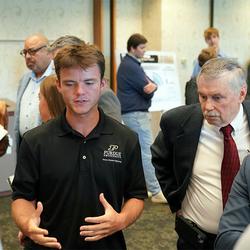
A consortium funded through the U.S. Department of Energy’s Nuclear Energy University Program (NEUP), DE-NE-0009525, has begun implementing a $6 million grant aimed at boosting advanced reactor R&D while building a workforce for the future.

Based at Purdue University’s School of Nuclear Engineering, the consortium includes three universities, one community college network, three national laboratories and nine industry partners
April 2, 2026

Graduate seminar highlights digital twin technology for Purdue’s nuclear research reactor

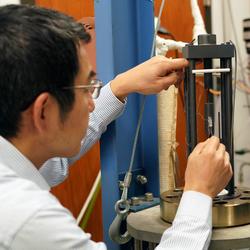
PhD candidate Vasileios Theos is advancing nuclear engineering research at the Purdue NE with his work on a high-fidelity digital twin of the Purdue University Reactor (PUR-1). Selected for the Graduate Research Recognition Seminar, Theos is developing a platform that combines real-time data with advanced modeling to simulate reactor behavior, supporting research, operator training, and emerging technologies in autonomous control and system diagnostics.
February 6, 2026

Detecting the Undetectable: Cosmic Rays for Nuclear Security

Purdue NE PhD candidate Reshma Ughade is being showcased in Purdue's InnovatED Graduate Research Magazine as part of its annual celebration of 10 graduate students and postdoctoral scholars whose work demonstrates real-world impact. Her research advances muon tomography by developing µTRec algorithms to image sealed nuclear fuel using cosmic-ray muons—safely and non-invasively.
January 23, 2026

Purdue nuclear engineer creates, validates inexpensive gamma radiation monitoring tech

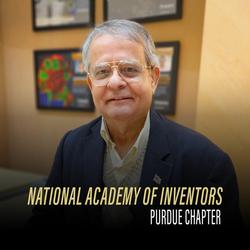
Inexpensive, highly accurate gamma radiation dosimeter technologies developed at Purdue could lower the costs of medical device sterilization, radiation cancer therapy, food irradiation, packaging sterilization and enhance nuclear power reactor safety. A Purdue Research Foundation story features Purdue Nuclear Engineering Professor Rusi Taleyarkhan, who leads a team that has created and validated two patent-pending innovations composed of beads made from polylactic acid.
Viewing 1 to 5 of 5