
Published on: February 17, 2026
AAE Spring Colloquium Series: Dr. James Cutler - 2/24
AAE Spring Colloquium Series: Dr. James Cutler - 2/24
Event Date:
February 24, 2026
Time:
3:00PM - 4:00PM
Location:
ARMS B061
Priority:
No
College Calendar:
Show
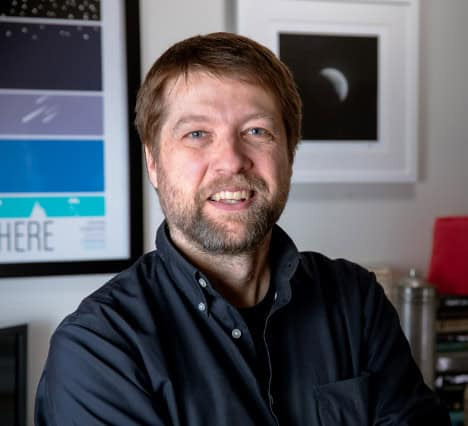
Small Space, Big Impact - A University Perspective
DR. JAMES CUTLER
Professor, Aerospace Engineering
University of Michigan
Abstract:
Small satellites are not merely shrinking spacecraft—they are reshaping who can access space and what missions are possible. For example, over the past two decades, CubeSats have evolved from educational tools into platforms capable of meaningful scientific discovery, technology validation, and even deep space exploration. This transformation has expanded participation in space and accelerated innovation across academia, industry, and government. This talk examines that expansion through the lens of the University of Michigan’s small satellite program. We highlight representative missions and discuss our current science mission, STARI, which aims to demonstrate key technologies enabling space-based interferometry—an approach that could fundamentally expand how we observe the universe. Beyond individual missions, we explore a broader question: what is the role of universities in an era in which space is becoming increasingly commercialized and operational? Universities are uniquely positioned to serve as incubators of high-risk innovation, rapid iteration, and workforce development. By integrating education, research, and flight experience, university-led small satellite programs can help shape the next generation of space architectures. As access to space continues to grow, the challenge is no longer whether small satellites can perform meaningful missions—but how institutions can strategically leverage them to drive scientific discovery, technological advancement, and sustainable talent pipelines for the future to improve life.
Biography:
James Cutler is a professor in the Aerospace Engineering Department at the University of Michigan. His research interests center on space systems–a multidisciplinary approach to enabling future space capability with particular emphasis on novel, nanosatellite missions. He is developing next-generation communication capability, robust space computing infrastructure, and advanced space missions.