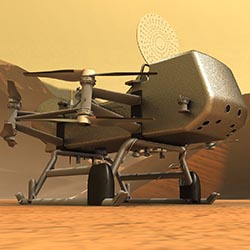
Saturn’s largest moon, Titan, is rich with organic substances and may contain clues to the chemical beginnings of life. NASA is planning to send a first-of-its-kind rotorcraft lander called Dragonfly to explore Titan’s unique surface.
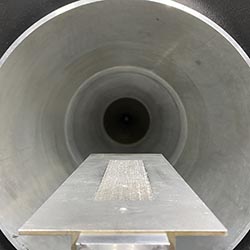
But before it begins flying, Dragonfly’s entry capsule has to make it through Titan’s dense atmosphere. That’s where Purdue University researchers come in. They are studying the chemistry that unfolds at extreme temperatures behind shock waves in Titan’s atmosphere. This directly influences the amount of radiative heating impacting the vehicle’s heat shield, which must withstand incredible temperatures to survive and allow for a successful landing of the Dragonfly rotorcraft on the surface of Titan.