
ENE Research Seminar: What Disability Teaches Us About AI, and Ourselves
ENE Research Seminar: What Disability Teaches Us About AI, and Ourselves
For the high-flex option, register in advance. You will receive a confirmation email containing information about joining the meeting.
Title:
What Disability Teaches Us About AI, and Ourselves
Abstract:
In this interactive session, Dr. Williams poses a series of questions to the attendees and supports their collective reflection on our preconceptions about disability and disabled life. After each question, Dr. Williams will illustrate how AI technologies have leveraged these cultural biases, to sometimes fatal effect. The examples covered in this session are taken from Dr. Williams's book, "Disabling Intelligences: Legacies of Eugenics and How We are Wrong about AI." Eugenics is more than a failed social movement driving debunked and outdated race science. Eugenics was and remains a collection of beliefs that persist throughout our societies, undergird our scientific inquiry, and shape our public policy as well as our interpersonal relationships.
Together, we explore how implementations of AI systems manifest many kinds of eugenics, from overt to covert, through the concept of Metaeugenics—the internalized beliefs that drive eugenic behaviors at the personal, interpersonal, and political levels. A new digital divide is forming between those that have the privilege to opt-out of artificial services and those that are forced into the labor that sustains them. This proliferation is enabled by a metaeugenic worship of intelligence and a belief that most people do not possess enough of it. Our collective belief in our own inadequacy is required to sustain the AI project. Dr. Williams prepares attendees to critically evaluate the motivations and consequences of the emerging and pervasive AI systems which claim to sell us a utopia while sustaining personal and environmental devastation. Finally, Dr. Williams provides an analytical tool for understanding the premises of an AI project, unmasking its false promises, and, within the bounds of your role in relation to this project, devising the possible actions you can take to build a better world.
Bio:
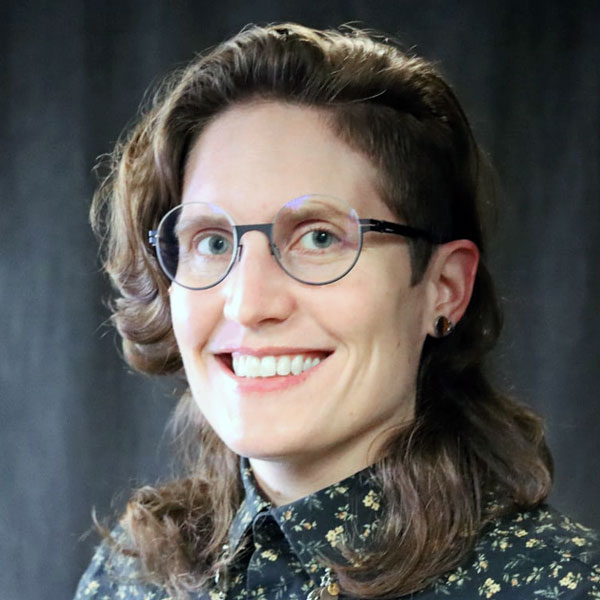
Rua M. Williams is an Assistant Professor in the School of Applied and Creative Computing at Purdue University and a former Just Tech Fellow with the Social Science Research Council. As Principal Investigator of the CoLiberation Lab, Dr. Williams’s work explores how disabled people imagine and build their own sociotechnical worlds. Together with their students, they investigate how technology policy and research practice interact to disrupt disabled people’s bodily autonomy and access to meaningful public life. Through their scholarship they illustrate injustice in technology and uplift marginalized peoples' own practices of technosocial resistance. Dr. Williams's book, Disabling Intelligences: Legacies of Eugenics and How we Are Wrong about AI is available from Palgrave Macmillan.
Citation:
Williams, R.M. (2025). A Just AI Toolkit: We're Wrong about what to do Next. In: Disabling Intelligences. Palgrave Macmillan, Cham. https://doi.org/10.1007/978-3-032-02665-1_5
NOTE: This chapter, and the whole book, are supposed to be available through the Purdue library but some people have had trouble. Let her know if you need a copy.