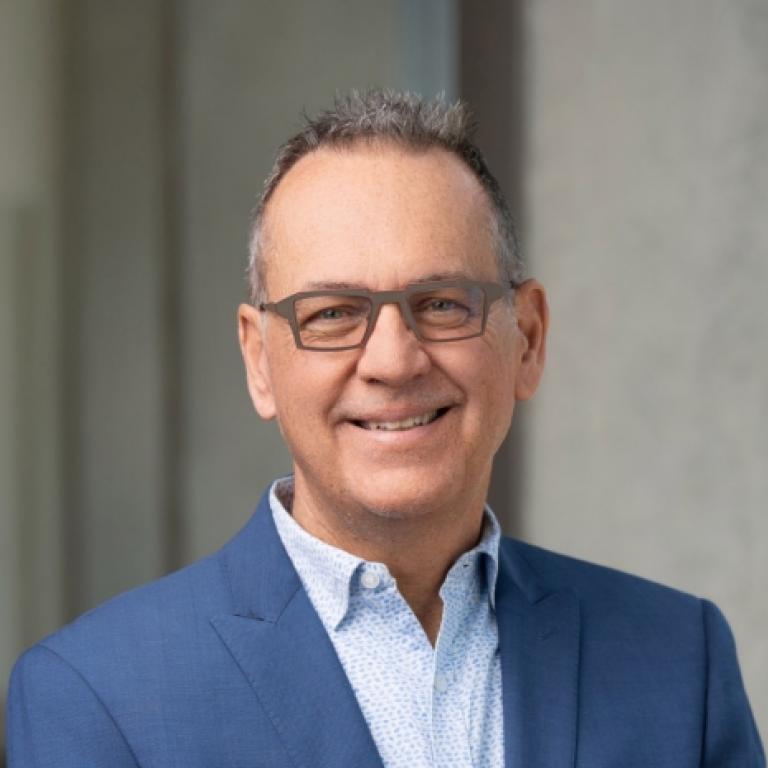
Dr. Jeffrey A. Hubbell
Vice President Life Schiences and Engineering,
Professor of Chemical and Biomolecular Engineering, Tandon School of Engineering,
Professor of Biology and Chemistry, Faculty of Arts and Sciences,
Professor of Biochemistry and Molecular Pharmacology, NYU Langone Health,
New York University
Hosts: Drs. You-Yeon Won & Xiaoping Bao
Bio:
Jeffrey Hubbell is Vice President Life Sciences and Engineering at NYU, where is professor in Chemical and Biomolecular Engineering in the Tandon School of Engineering, of Biology and Chemistry in the Faculty of Arts and Science, and Biochemistry and Molecular Pharmacology in the Grossman School of Medicine. In this role, Hubbell leads NYU’s cross-campus initiative in Engineering Health. He was elected to the US National Academy of Engineering in 2010, the National Academy of Medicine in 2019, the American Academy of Arts and Sciences in 2021, and the National Academy of Sciences in 2023.
With more than 400 papers and 100 issued US patents, Hubbell uses biomaterials and protein engineering approaches to investigate how immunity can be controlled to guide tolerogenic processes. In the context of inflammation, autoimmunity, and allergy, his laboratory explores how antigens, cytokines, and metabolites may be modulated to induce regulatory behavior in both the innate and adaptive immune compartments, working in models of cardiometabolic disease, inflammatory bowel disease, rheumatoid arthritis, multiple sclerosis, and food and environmental allergy. In the context of cancer, his laboratory examines how cytokines and immune stimulants can be directed to the tumor microenvironment to enhance anti-tumor immune responses. In regenerative medicine, his laboratory pursues approaches to modulate immunity to promote wound healing and resist or resolve fibrosis.
"Translating Control Technology for Personalized Medicine"
Abstract:
We explore materials and protein engineering approaches to deliver antigens and cytokines to tip the immune balance between tolerance and aggression. In the context of tolerance, induction of regulatory T cells is critical, and antigen specificity can arise from exogenously administered antigens in the form of an inverse vaccine or from endogenous antigens in a site of inflammation. In either case, we explore methods to induce or deliver cytokines to regions of lymph nodes where immunity develops and is regulated. In recent work in allergic asthma, we developed an approach employing glycosylated polymers to deliver allergic antigens and induce regulatory cytokine expression to re-bias immunity back to tolerance, inducing allergen-specific regulatory T cells and thus preventing asthmatic responses to pulmonary antigen challenge. In work in an experimental model of autoimmune neuroinflammation, we are developing an approach to deliver the tolerogenic cytokine IL-10 to all the secondary lymphoid organs of the body from a simple subcutaneous administration. Here, antigen specific Tregs were developed in response to myelin antigens that drain from the inflammation site. In the context of aggression, we have developed an approach to deposit inflammatory cytokines in the tumor microenvironment to tip the balance between cytotoxic T lymphocytes and Tregs, whether by agonizing innate immune cells such as macrophages and dendritic cells or adaptive immune cells, in particular T cells. With regard to antigens in mounting immune aggression, we have developed cysteine-reactive polymers that bind in situ to the surfaces of tumor cells to direct the adduct to antigen-presenting cells along with polymer-conjugated adjuvant moieties to induce an anti-tumoral vaccine response. Thus, in both contexts, biological functionality can be engineered to guide immunity toward tolerance in inflammation, allergy and autoimmunity and toward aggression in cancer.