Behavior and Design of Anchorages Subjected to Predominant Moment Loading
Earthquakes cause about $100B in economic losses worldwide each year. When buildings fail during earthquakes, a common reason is the failure of connections that hold structural components together. One of the most critical is the column-to-foundation connection, where columns transfer forces into concrete foundations through steel anchors or rebars. If these anchorages fail, the stability of the entire building may be compromised.
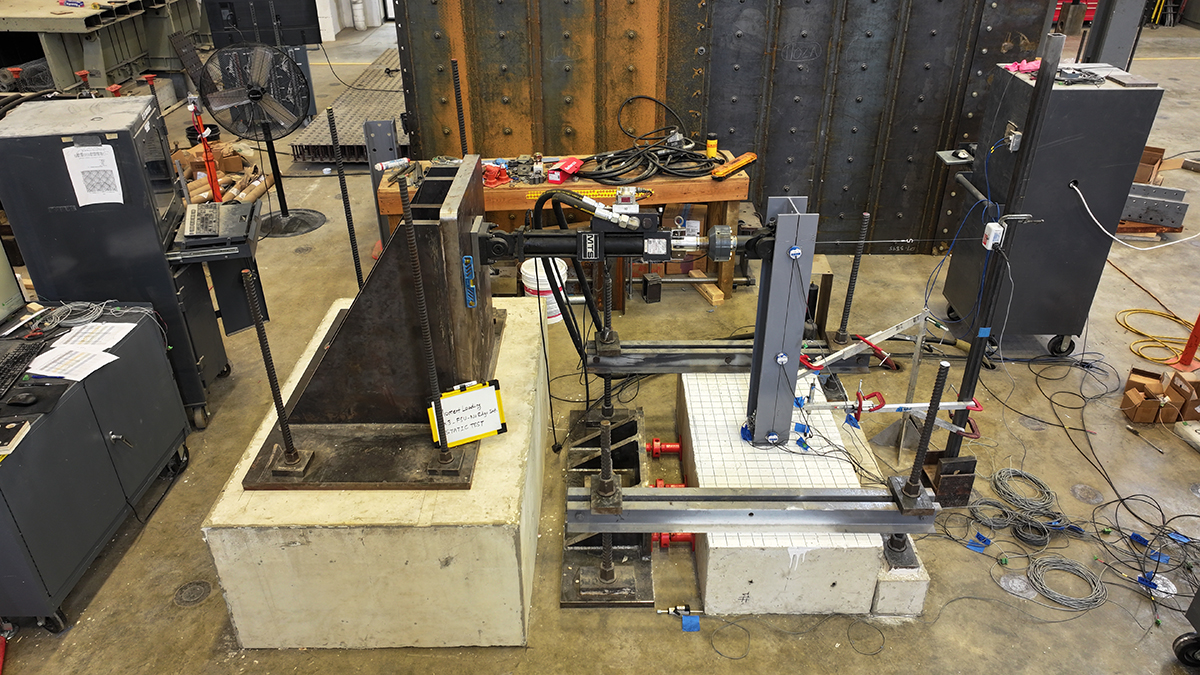
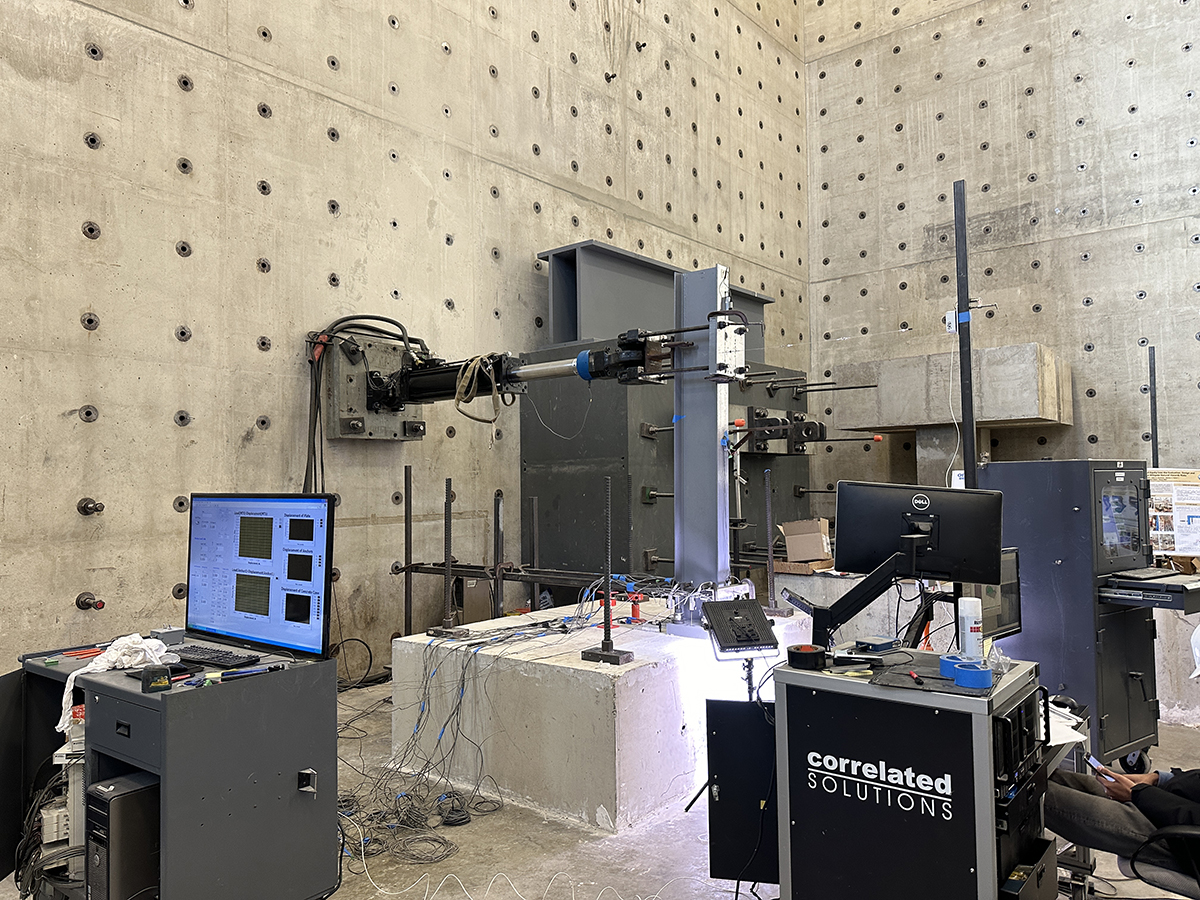
This research investigates how these anchorages behave under strong bending forces during earthquakes. Large-scale experiments at Bowen Laboratory simulated earthquake loading on column-to-foundation connections using post-installed anchors. Key parameters such as anchor size, spacing, and embedment depth were varied.
The results show that compression beneath the baseplate significantly increases anchor strength during bending, an effect not accurately accounted for in current design methods. This research introduces a simplified equation to improve design guidelines, supporting safer and more resilient structures in earthquake-prone regions.
Faculty Investigator: Akanshu Sharma
Graduate Researcher: Gaurav Chobe
Sponsor: fischerwerke GmbH & Co. KG, Germany